2 min read · Updated
Remembering faster isn't about reading faster or studying longer. It's about doing the kinds of practice that build memory most efficiently, and dropping the ones that only feel productive.
Stop rereading and highlighting
A large review of study techniques by Dunlosky and colleagues rated highlighting and rereading as low-utility: they're popular, but they do little for long-term memory. They feel good because the material looks familiar, not because you can recall it.
Six techniques that work
- Test yourself. Cover the answer and try to recall it before checking. In a well-known study, students who practiced retrieving Swahili–English word pairs remembered far more a week later than students who kept restudying them.
- Space it out. Short sessions spread over days beat one long session, even when the total time is the same. Space the reviews further apart as the material gets easier.
- Add a picture. Images are remembered remarkably well. Pairing a word with a picture gives you a second, visual route to the same memory.
- Use real examples. A word in a sentence, or a formula in a worked problem, connects new information to what you already know.
- Mix topics. Switching between related topics (interleaving) feels harder but helps you tell similar ideas apart.
- Sleep on it. Memory consolidation happens during sleep. A night's sleep between study sessions helps more than an all-nighter.
Why harder practice is faster
Researchers Robert and Elizabeth Bjork call these 'desirable difficulties'. Recalling something from memory, especially when it takes effort, does more for retention than seeing the answer again. The struggle is the point: if a review feels effortless, it's probably too soon.
The practical rule: when you can recall something easily, wait longer before the next review. When you can't, review it again soon.
A ten-minute daily routine
- Review the cards that are due today first, recalling each one before you look.
- Rate how hard each one was, honestly.
- Add a handful of new items only once the due cards are done.
- Stop when you hit your goal. Coming back tomorrow matters more than one long session.
How Braintain puts this into practice
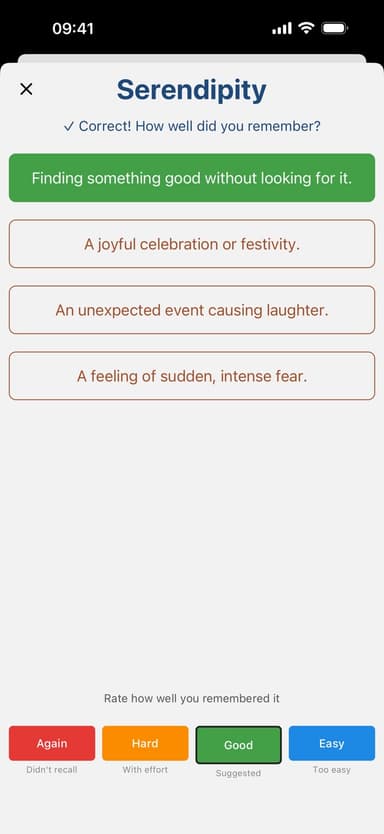
A Braintain session is this routine. You see the picture and the example, recall the meaning, rate yourself, and the app schedules the next review. Each session sets a goal from the cards you have due, so you know when you're done for the day.