
How Braintain Works
AI images burn concepts into memory. Spaced repetition keeps them there.
The learning flow
From setup to mastery: six simple steps to remember better
Create or join BrainPods
Organize flashcards into learning groups for any subject: vocabulary, science, history, or custom topics.
Train with active recall
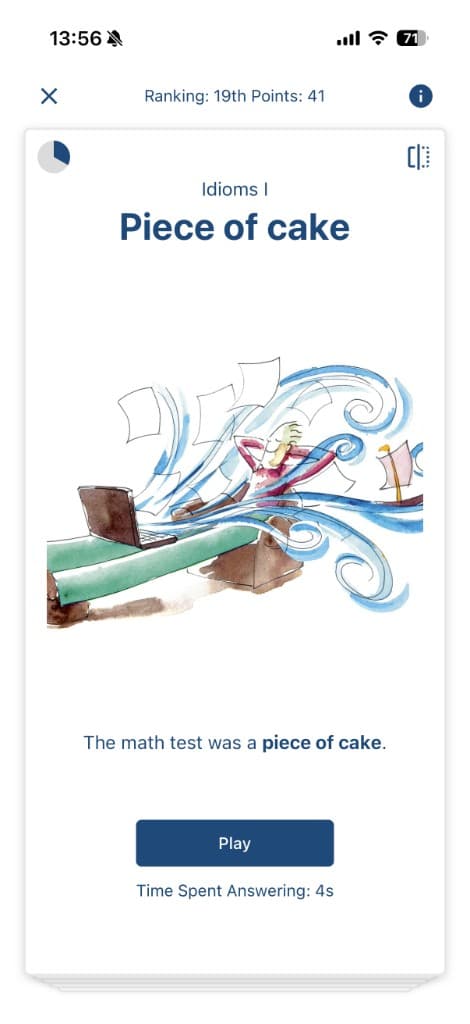
See the concept and image first. Tap the speaker to hear the word and its example read aloud. Recall or guess the meaning before flipping to reveal the answer.
Rate each card
After revealing the answer, rate how well you remembered it: Again, Hard, Good, or Easy. That single tap is the input the algorithm needs.
The algorithm schedules your next review
Easy cards come back in weeks. Hard ones return tomorrow. The SM-2 algorithm calculates the optimal interval for each card individually, so you spend time where it matters most.
Reach your session goal
Each session sets a goal based on how many cards are due and shows your progress towards it. When you get there, finish for the day or keep going.
Cards mature over time
Every card tracks its own progress: New → Learning → Mature. As your ratings improve, intervals grow longer and review sessions get shorter. Your memory compounds.
The four-level rating system
After each card, one tap tells the algorithm everything it needs to schedule your next review.
Again
Completely forgot
Review tomorrow
Hard
Recalled with effort
Review very soon
Good
Recalled correctly
Review in a few days
Easy
Instantly knew it
Review in weeks
The more accurately you rate yourself, the smarter the schedule becomes. Over time, review sessions get shorter as more cards reach “Mature” status.
Cognitive science behind the approach
Memory benefits from active recall, retrieving information from your mind rather than passive rereading. Braintain centers each session on recall: you think before you see the answer.
Spaced repetition (using the SM-2 algorithm) is built into every card: your rating after each review determines the interval before the card appears again. Easier cards get longer gaps; harder ones return sooner. The system adapts continuously to your personal recall patterns.
Combining active recall with spaced repetition and AI-generated visual anchors creates what researchers call elaborative encoding: multiple pathways to the same memory, which makes retrieval significantly more reliable. It's why every BrainPod comes with images built in, not as an afterthought.
Why AI images make the difference
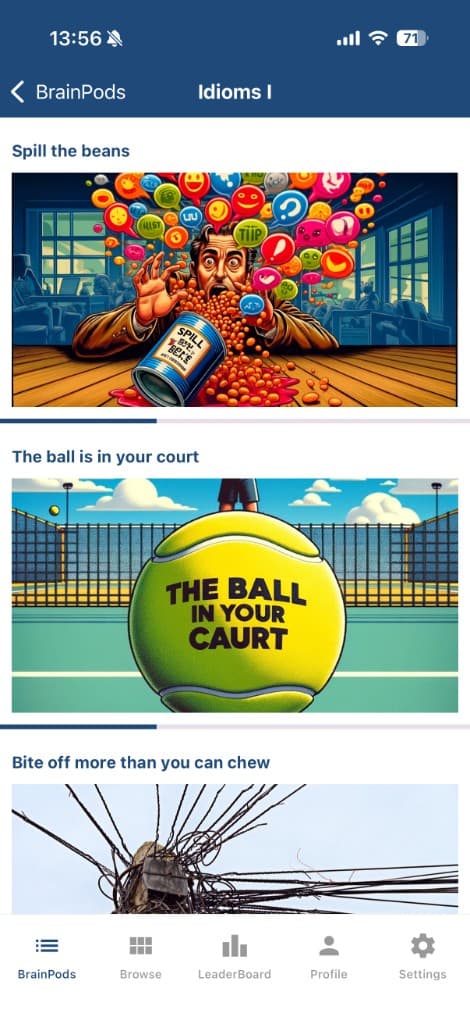
Images add a visual anchor to abstract concepts. When a vivid visual is paired with a word or idea, you form a dual encoding: verbal and visual. This makes the memory far more retrievable later, with two pathways to the same concept instead of one.
Every BrainPod in Braintain comes with AI-generated images already attached to each card, no setup needed. Each time you train, you see the image alongside the concept and example, strengthening the link between the visual cue and the meaning. Creating your own cards? You can add images from the built-in library or your own camera roll.
Ready to explore everything Braintain offers?
Explore featuresTrain your memory today
A few minutes a day. Lasting recall. Free on iPhone and Android.
No account required to start.