2 min read · Updated
Active recall means trying to remember something before you look at it. It sounds obvious, but most studying does the opposite: we reread notes and highlight textbooks, putting information in front of our eyes instead of pulling it out of our heads.
The testing effect
In a 2006 study, Henry Roediger and Jeffrey Karpicke had students either reread a passage or take practice tests on it. Students who reread felt more confident. A week later, the students who had practiced recalling the passage remembered substantially more of it.
A 2008 study in Science made the point even more sharply. Students learning foreign vocabulary who kept testing themselves on every word recalled far more a week later than students who dropped words from testing once they'd got them right, even though both groups studied the same words.
Why it works
Every time you retrieve a memory, you make it easier to retrieve the next time. Reading an answer doesn't exercise that path; recalling it does. Recall also shows you exactly what you don't know, which rereading hides behind a feeling of familiarity.
Effort matters. A recall that takes a few seconds of struggle strengthens memory more than one that's instant, which is why active recall pairs so well with spaced repetition: the gaps make each recall a little harder.
Ways to practice active recall
- Flashcards: look at the prompt, say or think the answer, then flip.
- Close the book and write down everything you remember about a topic, then check.
- Turn headings into questions and answer them before reading the section.
- Explain the idea out loud as if teaching someone.
- Do practice questions before you feel ready.
Common mistakes
- Flipping too fast. Give yourself a real attempt before revealing the answer.
- Recognizing instead of recalling. Seeing the answer and thinking 'yes, I knew that' isn't the same as producing it.
- Stopping after one correct answer. Keep recalling items across several sessions.
How Braintain puts this into practice
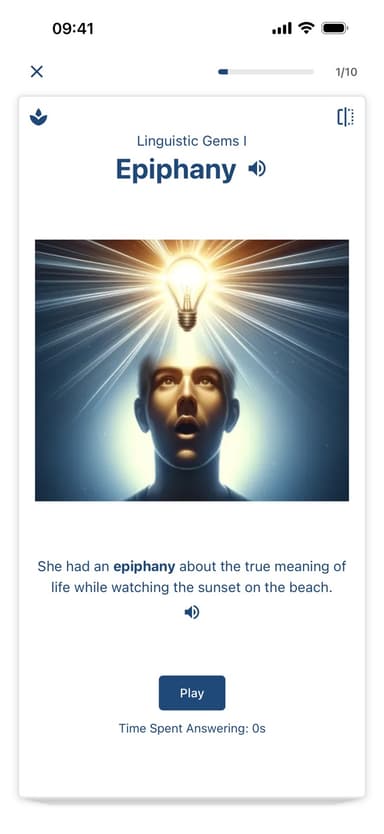
Every Braintain card starts with the picture and the word, and hides the meaning until you've had a go. Quiz mode asks you to pick the right meaning from believable options. Then you rate how it went, so cards you struggled with come back sooner.