1 min read · Updated
Micro-learning means studying in short, focused bursts, often ten minutes or less. It can sound too small to matter, but spread across days and weeks, short sessions build more lasting memory than the same time crammed into one sitting.
Why short sessions work
The main reason is the spacing effect: material reviewed across several sessions is remembered better than material studied in one block. Ten minutes a day for six days spreads your reviews out automatically. One hour on Sunday doesn't.
In a study on flashcard learning, Nate Kornell found that spreading a deck's reviews out beat studying it in small, massed batches for most learners, even though massed study felt more effective at the time.
Short sessions also keep attention high. It's easier to stay focused for ten minutes than for an hour, and every review counts more when you're actually paying attention.
What micro-learning is good for
- Vocabulary and phrases in a new language.
- Terminology for a course or a new job.
- Facts, dates, formulas and definitions.
- Keeping old knowledge fresh with quick reviews.
It's less suited to work that needs long stretches of deep thinking, like writing an essay or working through a hard proof. Use micro-learning to keep the building blocks in memory, and longer sessions to put them together.
How to make it work
- Pick a fixed moment: with your morning coffee, on the commute, after lunch.
- Start with what's due, not with new material.
- Recall actively. Ten minutes of testing yourself beats thirty minutes of rereading.
- Set a small goal and stop when you reach it, so you finish wanting more rather than feeling drained.
- Keep it on your phone so it's always within reach.
How Braintain puts this into practice
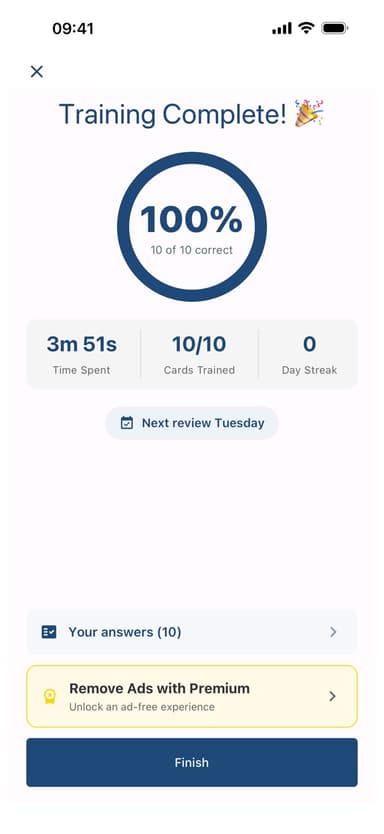
Braintain is designed for short sessions. Each session holds up to 10 cards, reviews first, and shows your progress towards its goal. The number on the app icon and the iPhone widget show the size of your next session, so you always know how little it takes to start.