2 min read · Updated
With spaced repetition, the schedule does the hard thinking for you. Your only job is to show up. That turns learning into a habit problem: the people who remember the most aren't the ones who study hardest, but the ones who study most regularly.
Why consistency beats intensity
Memories need to be reviewed around the time they start to fade. Miss a few days and reviews pile up; some cards slip past the point where you could recall them, and you have to relearn them. Short daily sessions keep every card on schedule, so each review is quick and successful.
How long does it take to build a habit?
In a study by Phillippa Lally and colleagues at University College London, people chose a daily behavior and tracked how automatic it felt. On average it took about 66 days to plateau, with a wide range from 18 to 254 days depending on the person and the habit. Missing a single day didn't derail the process.
So expect a couple of months before daily study feels automatic, and don't give up after a missed day.
Ways to make it stick
- Tie it to something you already do. 'After I pour my morning coffee, I'll do my cards' works better than 'I'll study every day'. Psychologists call this an implementation intention.
- Make it small. A goal you can finish on a bad day is better than an ambitious one you skip.
- Make it visible. A widget, a badge or a streak keeps it in mind.
- Use reminders, but sparingly: one well-timed nudge, not a stream of notifications.
- Never miss twice. One missed day is fine; two in a row is how habits fade.
Getting back on track
If you've fallen behind, don't try to clear a huge backlog in one go. Do your normal session, focus on the most overdue cards first, and hold off on adding new material for a few days. The backlog will shrink faster than you expect.
How Braintain puts this into practice
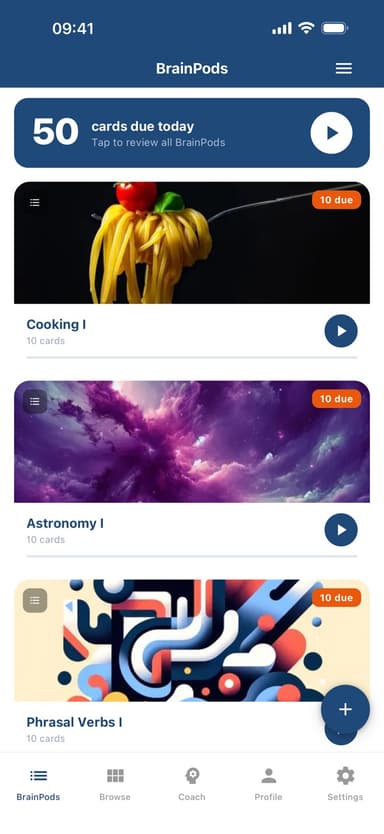
Braintain helps you show up: sessions of up to 10 cards keep each day small and finishable, badges mark milestones like a 7-day streak, optional review reminders nudge you when cards are due, and on iPhone a home-screen widget shows your due count and current streak. Mira, the AI coach, also flags cards that are slipping, so catching up after a break is focused instead of overwhelming.