2 min read · Updated
Knowing a definition isn't the same as knowing a word. To use a word naturally you need to know how it behaves: which words it goes with, what tone it carries, when it fits. That knowledge comes from context.
What 'knowing a word' really means
Linguists describe word knowledge in layers: recognizing the form, knowing the meaning, and knowing how it's used. That last layer includes collocations ('make a decision', not 'do a decision'), register (is it formal or casual?) and grammar (does it take an object?).
A definition covers the meaning layer. Example sentences cover the rest.
How people pick up words from context
Most of the words native speakers know were never taught directly; they were picked up from reading and listening. Research by Nagy, Herman and Anderson found that each encounter with a word in context teaches a little, and those small gains add up across many encounters.
The catch is that context alone is slow and unreliable for a learner. You may need many encounters, and you can guess wrong. Combining context with deliberate study gets the best of both: the example shows how the word is used, and review makes sure you remember it.
Using context clues
When you meet an unknown word, the surrounding text often hints at its meaning:
- Definition clues: the sentence explains the word ('a sommelier, or wine expert, recommended…').
- Contrast clues: the word is set against something you know ('unlike his gregarious brother, he was shy').
- Example clues: the sentence lists examples ('citrus fruits such as lemons and limes').
- Tone clues: the overall mood of the sentence suggests whether the word is positive or negative.
Make your own examples work harder
- Learn every new word with at least one natural example sentence.
- Read the example out loud, or listen to it, so you also learn the rhythm.
- Write a sentence of your own about your life using the word.
- When you review, read the example first and try to recall the meaning.
How Braintain puts this into practice
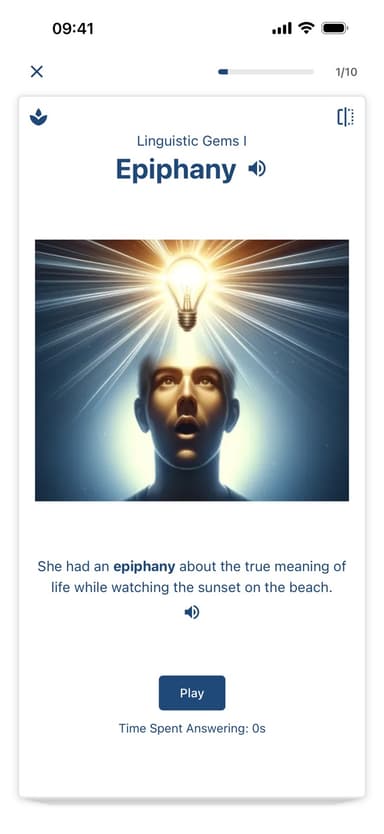
Every BrainPod card shows the word inside an example sentence, next to a picture, and you can tap to hear both read aloud. You see the word working in context before you check the meaning. When you write your own cards, add an example of your own for the same effect.