

Astronomy III flashcards
- Level 3
- English
- 10 cards
Learn Astronomy with 10 free flashcards (level 3): meanings, example sentences, pictures and audio pronunciation. Includes Exoplanet, Redshift, Event Horizon, Dark Matter and more.
Study this BrainPod in Braintain. Spaced repetition brings each card back right before you forget it.
Get the free appAll 10 cards
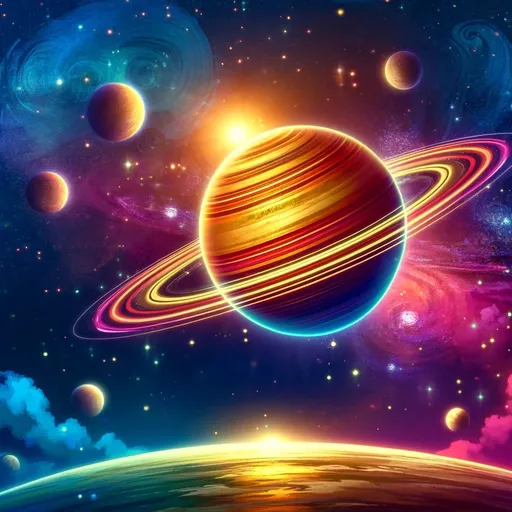
Exoplanet
A planet that orbits a star outside the Solar System.
“Astronomers have discovered a new exoplanet that may have conditions to support life.”
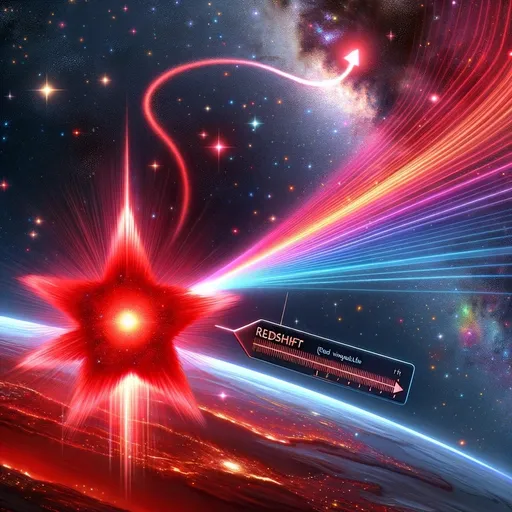
Redshift
The phenomenon where light from an object is increased in wavelength, or shifted to the red end of the spectrum, often used in determining the speed and distance of stars or galaxies.
“Scientists used redshift to measure the distance of the galaxy from Earth.”
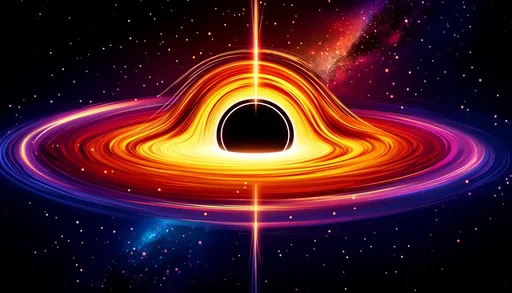
Event Horizon
A theoretical boundary around a black hole beyond which no light or other radiation can escape.
“Scientists have calculated the event horizon of the black hole using advanced mathematics and physics.”

Dark Matter
A form of matter thought to account for approximately 85% of the matter in the universe, not directly observable as it does not emit or interact with electromagnetic radiation.
“Dark matter is one of the greatest mysteries in modern astrophysics.”

Pulsar Wind Nebula
A nebula that is powered by the wind of a pulsar, a highly magnetized, rotating neutron star.
“The Crab Nebula is one of the most famous examples of a Pulsar Wind Nebula.”

Hawking Radiation
Theoretical radiation predicted to be emitted by black holes, due to quantum effects near the event horizon.
“Scientists are still seeking to confirm the existence of Hawking Radiation as described by Stephen Hawking.”
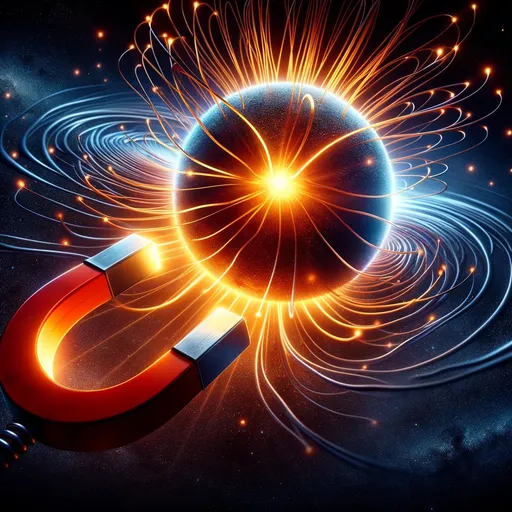
Magnetar
A type of neutron star with an extremely powerful magnetic field.
“The discovery of a magnetar in the nearby galaxy has intrigued astronomers.”

Gravitational Lensing
The distribution of matter between a distant light source and an observer, capable of bending the light from the source as the light travels towards the observer.
“Astronomers used gravitational lensing to observe a distant galaxy hidden behind a massive cluster.”

Solar Flare
A sudden eruption of intense high-energy radiation from the sun's surface, often associated with sunspots and causing electromagnetic disturbances on the Earth.
“During the last solar cycle, a significant solar flare disrupted satellite communications.”

Cosmic Microwave Background
Weak radiation that is the remnant heat left over from the Big Bang, filling the observable universe.
“The discovery of the cosmic microwave background provided strong evidence for the Big Bang theory.”