
Astronomy Flashcards with Pictures, Level 2
- Level 2
- English
- 10 cards
Learn Astronomy with 10 free flashcards (level 2): meanings, example sentences, pictures and audio pronunciation. Includes Nebula, Quasar, Space Probe, Pulsar and more.
All 10 cards have a picture, an example sentence and recorded audio. Other Astronomy levels: Level 1, Level 3.
Try 5 cards right here. Guess the meaning, the same way you study in the app. No account needed.
All 10 cards

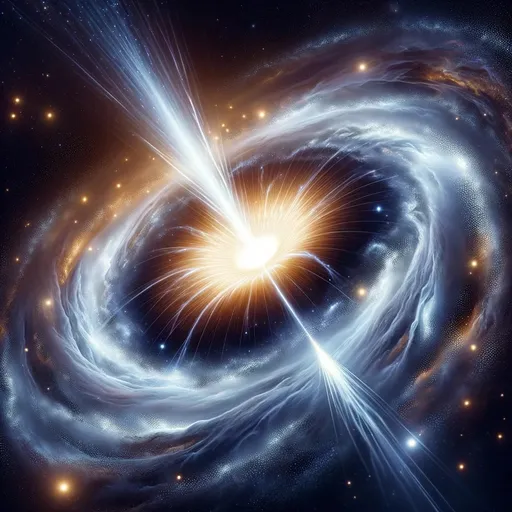
An interstellar cloud of dust, hydrogen, helium, and other ionized gases.
“Through the telescope, we could see the colorful hues of the distant nebula.”
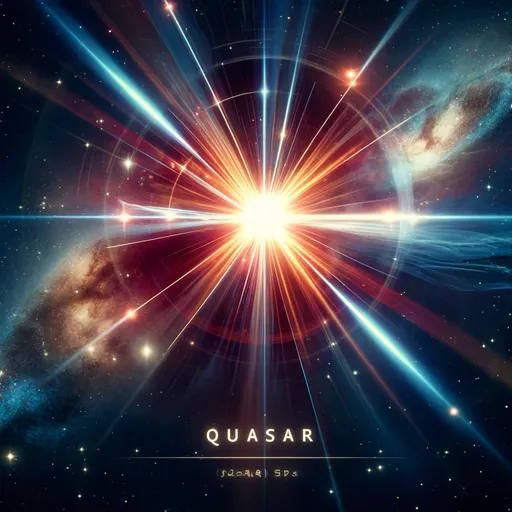
A highly luminous, starlike object that emits energy at a high rate; thought to be the most distant objects in the universe.
“The astronomer was thrilled to observe a quasar, noting its incredible brightness and energy.”

An unmanned spacecraft designed to explore the solar system and transmit data back to Earth.
“The space probe successfully sent back images of Jupiter's moons.”
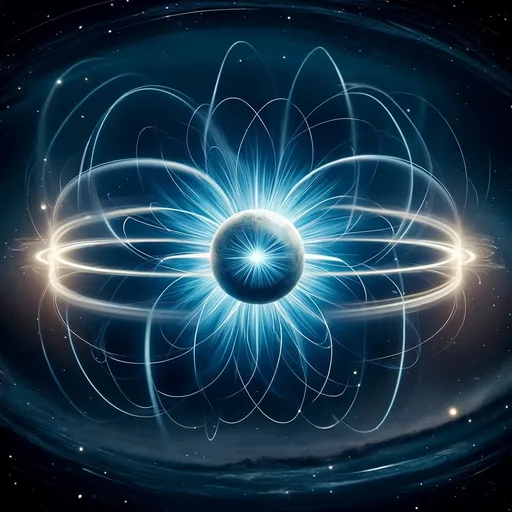
A highly magnetized, rotating neutron star that emits beams of electromagnetic radiation.
“The scientist explained how a pulsar emits beams of radiation as it spins.”

A region of space having a gravitational field so intense that no matter or radiation can escape.
“Scientists believe a black hole lies at the center of our galaxy.”
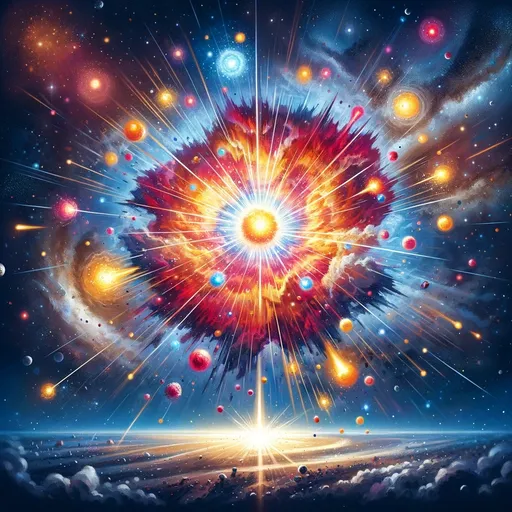
A stellar explosion that occurs at the end of a star's life cycle.
“The astronomers observed a bright supernova in the night sky.”

An ancient instrument used to solve problems related to time and the position of the stars.
“The explorer used an astrolabe to chart his course by the stars.”
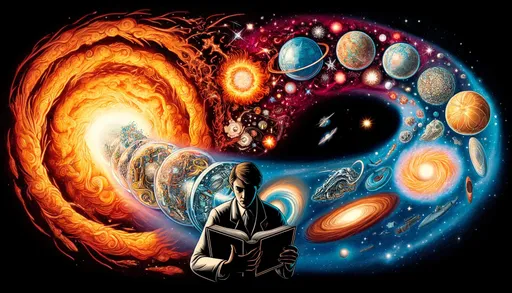
The scientific study of the origin, evolution, and eventual fate of the universe.
“Modern advancements in telescopes have greatly impacted the field of cosmology.”
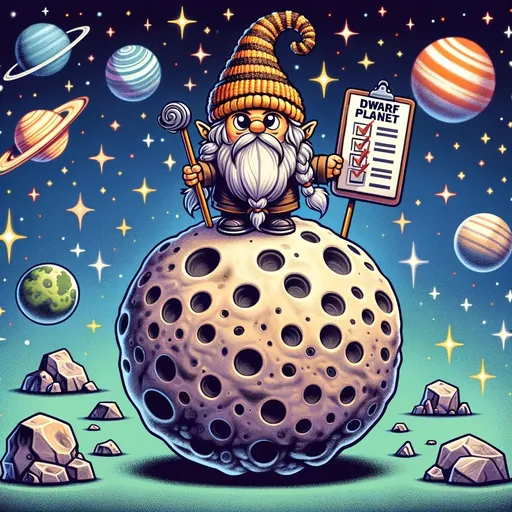
A celestial body resembling a small planet but lacking certain technical criteria that are required for it to be classified as such.
“Pluto was reclassified as a dwarf planet because it does not clear its neighboring region of other objects.”
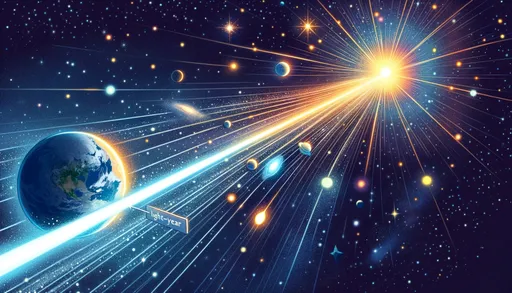
A unit of astronomical distance equivalent to the distance that light travels in one year.
“The nearest star to Earth, Proxima Centauri, is about 4.24 light-years away.”
