

Economics III flashcards
- Level 3
- English
- 10 cards
Learn Economics with 10 free flashcards (level 3): meanings, example sentences, pictures and audio pronunciation. Includes Phillips Curve, Tragedy of the Commons, Rational Expectations Theory, Hedonic Pricing and more.
Study this BrainPod in Braintain. Spaced repetition brings each card back right before you forget it.
Get the free appAll 10 cards
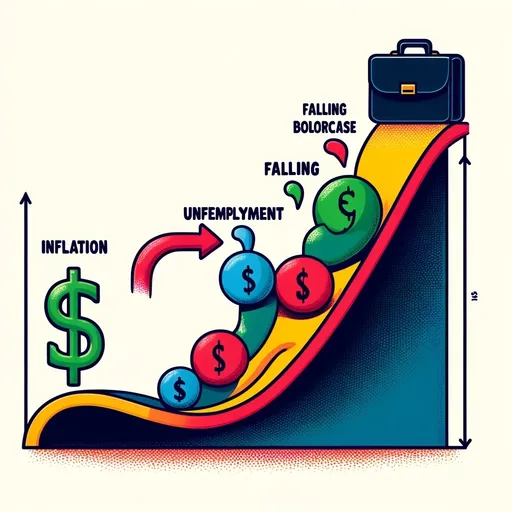
Phillips Curve
A theory that suggests an inverse relationship between the rate of inflation and the rate of unemployment.
“According to the Phillips Curve, decreasing unemployment in an economy may lead to higher inflation.”

Tragedy of the Commons
A situation in a shared-resource system where individual users act independently according to their own self-interest and behave contrary to the common good of all users by depleting or spoiling the shared resource through their collective action.
“Overfishing in international waters is a classic example of the Tragedy of the Commons.”

Rational Expectations Theory
The theory that people optimally use all available information, including information about current and future policy, to forecast the future.
“Rational Expectations Theory posits that it is difficult to systematically outperform the market since all available information is already reflected in asset prices.”

Hedonic Pricing
A model that identifies price factors according to the premise that price is determined both by internal characteristics of the good being sold and external factors affecting it.
“In hedonic pricing, the value of a house may be affected by its size, location, and proximity to amenities.”

Stagflation
A condition of slow economic growth and relatively high unemployment – a time of stagnation – accompanied by a rise in prices, or inflation.
“The 1970s saw many Western economies experiencing stagflation, with high inflation and unemployment rates.”
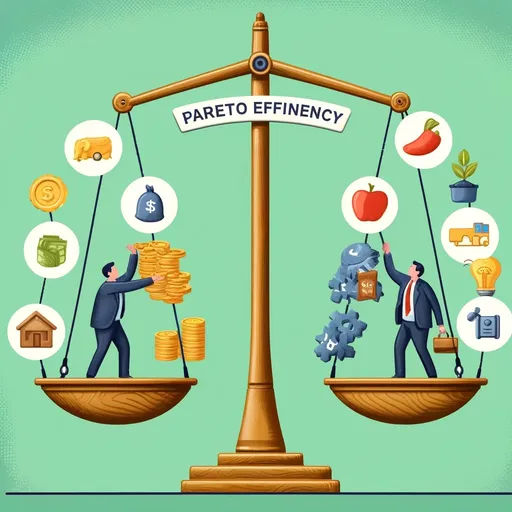
Pareto Efficiency
A state of allocation of resources in which it is impossible to make any one individual better off without making at least one individual worse off.
“A society that has achieved Pareto Efficiency is not necessarily equitable, but no resources can be reallocated without causing harm to someone.”

Laffer Curve
A representation of the relationship between rates of taxation and the resulting levels of government revenue.
“The Laffer Curve suggests that at a certain point, increasing tax rates will actually decrease total tax revenue.”

Structural Unemployment
Unemployment resulting from industrial reorganization, typically due to technological change, rather than fluctuations in supply or demand.
“The rise of automation has led to structural unemployment in manufacturing sectors.”

Endogenous Growth Theory
A theory that economic growth is generated from within a system as a direct result of internal processes.
“Endogenous Growth Theory emphasizes the role of technological innovation and knowledge in driving economic growth.”

Contingent Liability
A liability that may occur depending on the outcome of an uncertain future event.
“A company facing a lawsuit has a contingent liability, as it may have to pay damages if it loses the case.”