

Linguistic Gems II flashcards
- Level 2
- English
- 10 cards
Learn Linguistic Gems with 10 free flashcards (level 2): meanings, example sentences, pictures and audio pronunciation. Includes archaism, eponym, calque, zeugma and more.
Study this BrainPod in Braintain. Spaced repetition brings each card back right before you forget it.
Get the free appAll 10 cards

archaism
A word or phrase that is outdated or no longer in common use.
“The poet intentionally used archaisms to evoke a medieval atmosphere in her verses.”

eponym
A person’s name that gives its name to a place, invention, or discovery.
“Sandwich is an eponym derived from the Earl of Sandwich.”

calque
A phrase translated literally from another language word for word.
“The English expression 'flea market' is a calque from the French 'marché aux puces'.”

zeugma
A figure of speech where a word applies to multiple others in different senses.
“She broke his car and his heart in the same day, an example of zeugma.”

syncope
The omission of sounds or letters from the interior of a word.
“In informal speech, 'family' often undergoes syncope and sounds like 'fam-ly'.”

tmesis
The separation of parts of a compound word by an intervening word or words.
“The phrase 'abso-bloody-lutely' shows tmesis.”

hapax legomenon
A word that occurs only once within a context or body of literature.
“The poem contains a hapax legomenon that makes interpretation difficult.”
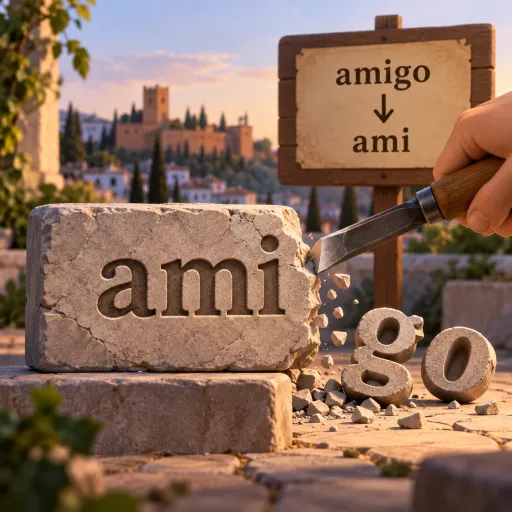
apocope
The loss of one or more sounds or letters at the end of a word.
“In many dialects, 'going' undergoes apocope to become 'goin'.”

parataxis
The placing of clauses or phrases one after another without conjunctions.
“He came, he saw, he conquered is a classic example of parataxis.”

folk etymology
A change in a word because people mistakenly connect it with a familiar word.
“The Spanish word 'cucaracha' was altered by folk etymology in English as 'cockroach'.”