

Computer Science III flashcards
- Level 3
- English
- 10 cards
Learn Computer Science with 10 free flashcards (level 3): meanings, example sentences, pictures and audio pronunciation. Includes Quantum Computing, Asymptotic Analysis, P vs NP Problem, Heuristic Algorithm and more.
Study this BrainPod in Braintain. Spaced repetition brings each card back right before you forget it.
Get the free appAll 10 cards

Quantum Computing
A type of computing based on the principles of quantum theory, utilizing quantum bits or qubits.
“The advancements in quantum computing have the potential to revolutionize fields like cryptography and materials science.”

Asymptotic Analysis
A method to describe the behavior of algorithms as the input size approaches infinity, often used in big O notation.
“Asymptotic Analysis helps computer scientists understand the efficiency of algorithms for large inputs.”

P vs NP Problem
A fundamental unsolved problem in computer science, concerning the efficiency of solutions to polynomial time problems.
“The P vs NP Problem is one of the most profound and perplexing questions in computer science.”

Heuristic Algorithm
A practical approach to problem-solving that does not guarantee an optimal solution but is sufficient for reaching an immediate goal.
“When the exact solution is too costly to compute, a heuristic algorithm can provide quick and efficient approximations.”

Distributed Systems
A computing concept where multiple systems work together, appearing as a single coherent system to the end-user.
“The efficiency of e-commerce platforms hinges on deploying robust Distributed Systems.”

Graph Theory
The study of graphs, which are mathematical structures used to model pairwise relations between objects.
“In computer science, Graph Theory is used to optimize network routes.”

Augmented Reality
An enhanced version of reality created by the use of technology to add digital information on an image of something.
“Augmented reality is used in apps that overlay digital information onto the real world.”

Algorithmic Complexity
A measure of the computational complexity of algorithms, assessing the amount of resources they require.
“In computer science, understanding algorithmic complexity helps in selecting the most efficient solutions.”

Concurrent Programming
A form of computing in which several computations are executed concurrently—during overlapping time periods—instead of sequentially.
“Concurrent programming is essential for developing applications that can handle multiple operations simultaneously.”
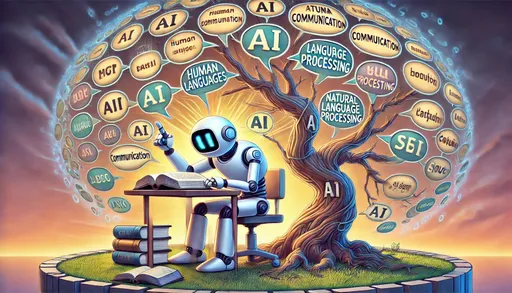
Natural Language Processing
A field of computer science and AI concerned with the interactions between computers and human languages.
“Advancements in Natural Language Processing allow computers to understand and interpret human speech more accurately.”